Depression Symptoms: What They Look Like and When to Get Help
Let's be honest: depression rarely announces itself. It usually creeps in quietly. By the time you notice it, you might be asking yourself, "Is this a real problem, or is it just me?" If you've lost someone recently, that question can feel even more tangled.
Depression, which professionals call a depressive disorder, is a mood condition that lasts at least two weeks and affects how you think, feel, and get through your day. It isn't the same as an ordinary sad week. Reading about it is a fine first step, and you're not alone in wondering.
Key facts at a glance
It's common. Globally, an estimated 5.2% of adults live with depression, according to the World Health Organization.
Timing matters. The National Institute of Mental Health suggests you talk to a health care provider if you have symptoms most of the day, nearly every day, for at least 2 weeks.
It's treatable. Effective treatments are available for mild, moderate, and severe depression, according to the WHO.
This is educational information, not a diagnosis. Only a licensed mental health professional can diagnose depression.
What Are the Signs of Depression? Symptoms of Depression at a Glance
The most common signs of depression are a low or empty mood and a loss of interest in things you used to enjoy. These last most of the day, nearly every day, for at least two weeks. Sleep, appetite, energy, and focus often change too.
Persistent low mood: Feeling sad, empty, or numb most days
Loss of interest: Hobbies and people start to feel flat
Sleep changes: Sleeping too much, too little, or waking at 3 a.m.
Appetite changes: Eating a lot more or a lot less
Low energy: Feeling tired even after rest
Trouble concentrating: Small decisions feel heavy
Worthlessness or guilt: A harsh inner voice that won't quiet down
A depressive episode is a stretch of time when these symptoms show up most of the day, nearly every day. No one has every symptom, and that's okay. Depression doesn't look the same for everyone. Some women may have many symptoms, and others may have only a few.
What are 5 warning signs of depression?
Five common warning signs are persistent sadness or emptiness, loss of interest, sleep or appetite changes, fatigue, and feelings of worthlessness or hopelessness. These matter most when they last two weeks or more.
Major Depression Symptoms and Signs of Clinical Depression
"Clinical depression," "major depression," and "major depressive disorder" all mean the same thing. It's a medical diagnosis, and a professional makes it after a careful conversation. It isn't a label for a bad stretch.
According to NAMI, a person must have at least 5 of the symptoms above most of the day, nearly every day, for at least two weeks. One of those symptoms must be either depressed mood or loss of interest or pleasure. A professional also looks at whether this is a real change from your usual self.
If you recognize yourself in a few of these, it doesn't mean something is wrong with who you are. It means something deserves a closer, kinder look.
The Two-Week Rule, Explained
Everyone has rough days. The two-week mark helps separate a hard patch from a depressive episode. After a loss, though, a professional weighs timing and intensity in context, because grief can look a lot like depression. I'll cover that below.
Mild, Moderate, and Severe Depression
| Severity | How it shows up day to day | Impact on work, relationships and self-care |
|---|---|---|
| Mild | Low mood, less enjoyment, more tired than usual | You keep up, but everything takes extra effort |
| Moderate | Several symptoms most days; sleep and focus clearly affected | Missed tasks, pulling back from people, self-care slipping |
| Severe | Symptoms feel constant and heavy; may include hopelessness or thoughts of death | Basic tasks like showering, eating or working feel very hard |
Severity can shift over time. Every level deserves support, and you don't have to wait for severe depression to ask for help.
Emotional, Physical, and Cognitive Symptoms of Depression
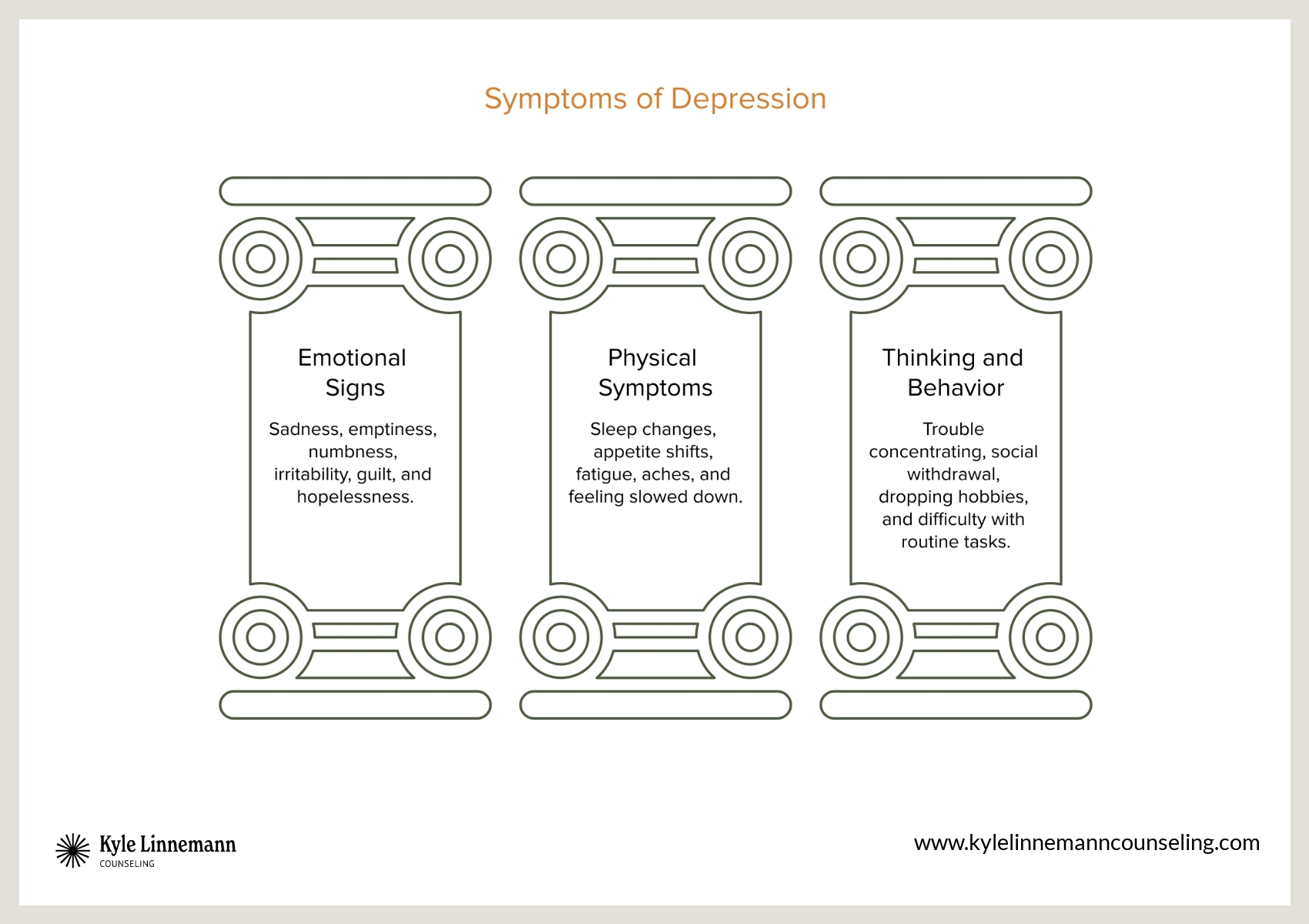
Depression affects your whole self, not just your mood. That's one reason it so often goes unrecognized. Many people expect sadness and miss everything else.
Emotional Signs of Depression
Sadness, emptiness, or numbness
Irritability or a short fuse
Guilt that doesn't match the situation
Hopelessness about the future
You might cry at a commercial, then feel nothing at a moment you expected to feel joy. Some people with depression don't feel sad at all. They just feel flat.
If any of this feels familiar, you don't have to sort through it by yourself.
Reach out to schedule a session with me and talk through what you're carrying.
Get in touch todayPhysical Symptoms of Depression
Sleep changes
Appetite or weight shifts
Fatigue that rest doesn't fix
Aches and pains that don't have a clear physical cause
Feeling slowed down
In my office, I often see physical symptoms show up first. Clients mention headaches, exhaustion, or an unsettled stomach long before they mention mood. Your body is part of the story.
Thinking and Behavior Changes
Trouble concentrating or making decisions
Pulling away from friends and family
Dropping hobbies you used to love
Routine tasks, like laundry or returning a call, feeling huge
Maybe you read the same paragraph four times. Or you cancel plans you'd usually look forward to, and feel relieved, then guilty. That's more common than you might think.
Depression Warning Signs: Lesser-Known Signs and Differences by Group
Not everyone sees themselves in the classic list. Some lesser-known depression warning signs include anger, restlessness, unexplained pain, and a quiet loss of motivation. If you're high-functioning, you might still show up at work while running on empty and snapping at home.
| Group | How depression may show up |
|---|---|
| Men | Irritability, anger, working longer hours, physical complaints |
| Women | Sadness, guilt, anxiety, exhaustion; sometimes linked to hormonal life stages |
| Teens | Moodiness, slipping grades, withdrawing from family |
| Older adults | Fatigue, aches, memory worries, less interest in going out |
| Postpartum | Deep sadness, anxiety, and fatigue that make caring for yourself or your baby hard |
On that last point, the NIMH explains that perinatal depression occurs during pregnancy or after childbirth. It's more than the "baby blues" many new moms experience after giving birth.
Different Types of Depression
Think of these as a map, not a checklist to self-assign. The NIMH depression guide describes several:
Major depression: Symptoms of depressed mood or loss of interest, most of the time for at least 2 weeks, that interfere with daily activities.
Persistent depressive disorder: Less severe symptoms that last much longer, usually at least 2 years.
Perinatal depression: Depression during pregnancy or after birth, including postpartum depression.
Seasonal pattern: Symptoms that typically start in late fall and early winter and go away during spring and summer.
Depression with psychosis: A severe form of depression in which a person has psychosis symptoms, such as delusions (fixed false beliefs) or hallucinations (perceiving things that aren't there).
A mental health professional can help you figure out which type of depression, if any, fits what you're going through.
How do you know if you are depressed?
Only a licensed professional can diagnose depression. Still, if your symptoms show up most days for two weeks or longer and make daily life harder, that's a good reason to talk with someone. If you're grieving, the grief vs. depression table above may help you sort out what you're feeling first.
Grief vs. Depression: How to Tell the Difference
If you're grieving, you might be reading this and wondering whether your sadness has turned into something more. That's a brave question to ask. Grief is a natural response to loss, not a disorder, and it doesn't come with a deadline.
The two can look alike. The American Psychiatric Association notes that grief shares some features with depression, like intense sadness and withdrawal from customary activities. Grief and depression can also happen together, and having both isn't a failure.
When they do coexist, the grief tends to be more severe and prolonged than grief without major depression. That's a good reason to get support, not a reason to blame yourself.
Here are some differences the APA's depression guide describes:
| Pattern | Grief | Depression |
|---|---|---|
| Mood | Comes in waves, often tied to memories, with moments of comfort | Low most of the day, nearly every day |
| Self-worth | Usually intact | Feelings of worthlessness or self-blame are common |
| Enjoyment | Moments of warmth or laughter still break through | Hard to feel pleasure in almost anything |
| Over time | Waves usually soften and spread out | Tends to stay steady or deepen |
| Thoughts of death | Often about missing or wanting to be with the person who died | More often tied to feeling worthless or undeserving |
Signs Your Grief May Include Depression
Ongoing feelings of worthlessness or self-blame
Weeks without any pleasure, even in small moments
Symptoms getting heavier instead of easing
Real trouble functioning at work or home
Thoughts of ending your life
These are reasons to talk with a professional, not a diagnosis. And that's okay.
When to Get Help for Depression Symptoms
Reaching out can feel like the hardest part. Here's a gentle way to think about it:
Notice: Jot down what you're feeling and how long it's lasted.
Share: Tell one person you trust.
Consult: See your doctor or a licensed mental health professional.
Get urgent help if you ever feel unsafe.
Diagnosis and treatment usually start with a conversation. A professional asks about your symptoms, including any substance use. They may also suggest a medical check to rule out other causes, like thyroid issues or certain medications.
Treatment for depression can include therapy, medication, lifestyle changes, and support from people around you. I use two approaches often. Cognitive behavioral therapy (CBT) helps you notice and shift unhelpful thought patterns. Acceptance and commitment therapy (ACT) helps you make room for hard feelings while moving toward what matters. If you have questions about medication, please talk with your doctor or prescriber.
If you're having thoughts of suicide, you don't have to figure out the label first. Call or text 988 or chat online at 988Lifeline.org to reach the 988 Suicide & Crisis Lifeline. The 988 Lifeline is confidential, free, and available 24/7/365. If you're in immediate danger, call 911.
What to Expect at a First Appointment
It's a conversation. There are no tests to pass and no pressure to find the right words. It can help to mention:
How long you've felt this way
What's changed from your usual self
Your sleep, appetite, and energy
Any recent losses or big life changes
Simple Steps You Can Take Today
Text or call one person you trust
Keep a regular bedtime, even loosely
Take a short walk outside
These steps can support your mental health, but they don't replace professional care.
How can I overcome depression?
Depression is treatable. Therapy, sometimes medication, and steady support are the usual paths. It isn't about willpower. Many of my clients find that small daily steps combined with professional guidance help them feel more like themselves again.
Take a First Step Into Depression Counseling When Worry and Low Mood Overlap
Anxiety and depression often show up together, especially during grief, when racing thoughts and heavy days can trade places hour by hour. If the worry side feels louder for you, it may help to read about common generalized anxiety disorder symptoms.
In anxiety therapy in Erlanger, KY, we'll work together to understand what's happening, using CBT and ACT skills that fit your life. If low mood is the bigger concern, you can learn about depression counseling with me.
Your first step can be small. Call me at (859) 212-6448 or email kyle@griefcounselingnky.com, and tell me a little about what you've been noticing. We'll talk about whether my approach is a good fit for you, with no pressure to decide anything on that first call.
Whatever you're carrying right now, you're not alone, and you don't have to sort it out all at once. I'd be glad to walk alongside you.
This article is for education only and isn't a substitute for diagnosis or treatment from a licensed professional.