Generalized Anxiety Disorder Symptoms: What They Are and What Helps
You worry. A lot. About things that haven't happened yet, things that probably won't happen, and things you can't control no matter how much time you spend thinking about them. You know, on some level, that your anxiety is out of proportion. But you can't seem to turn it off.
If that sounds familiar, it makes a lot of sense that you ended up here. What you're describing might be more than everyday stress. Generalized anxiety disorder, or GAD, is one of the more common anxiety disorders, and it is often misunderstood.
In this article, I'll walk you through:
What generalized anxiety disorder actually is
The symptoms of GAD, including the ones people rarely talk about
Physical symptoms that often get mistaken for something else
How GAD is diagnosed and what causes it
What actually helps, from treatment options to daily changes
Whether you're trying to understand what you're experiencing or figure out next steps, I hope this helps you feel a little more seen.
What Is Generalized Anxiety Disorder?
Generalized anxiety disorder is a type of anxiety disorder characterized by persistent, excessive worry about everyday things. Not one specific situation, but many. Work, health, relationships, money, safety, the future. The worry moves from topic to topic, and it's hard to control no matter how much logic you apply to it.
GAD is different from the everyday anxiety most people feel before a presentation or a difficult conversation. With GAD, the anxiety doesn't go away once the stressful moment passes. It just finds something new to attach to.
Something I say to clients often is: "You're not a worrier because you're weak. You're a worrier because your nervous system has learned that staying alert feels safer." That's a distinction worth holding onto.
According to the Anxiety and Depression Association of America, GAD affects 6.8 million adults in the U.S. each year. NIMH estimates past-year prevalence among U.S. adults at 2.7%, with higher rates among women than men.
Think this might be more than everyday worry?
I offer anxiety therapy in Erlanger, KY for individuals in Northern Kentucky and the Greater Cincinnati area. Let's talk about what's going on.
The Mental Symptoms of Generalized Anxiety Disorder
Most people think of anxiety as a feeling. But for those experiencing symptoms of generalized anxiety disorder, it shows up as a whole pattern of thoughts and behaviors, too.
Excessive Worry About Everyday Things
The hallmark symptom of GAD is excessive worry that's hard to control. Not just one area of life, but many. A person with GAD might lie awake worrying about a work email, their child's health, whether they said something wrong three days ago, and what they'll do if the car breaks down, all in the same hour.
The worry is usually disproportionate to the actual situation. And people with GAD typically know that. Which often makes it more frustrating, not less.
Difficulty Concentrating
When your mind is constantly scanning for threats, there isn't much bandwidth left for focus. Difficulty concentrating is one of the diagnostic criteria for GAD, and it shows up in real ways: losing your train of thought mid-sentence, re-reading the same paragraph five times, forgetting things you normally wouldn't.
Some clients tell me their mind "goes blank" under pressure. That's a classic anxiety and worry response, not a sign something is permanently wrong with your memory.
Restlessness and Feeling On Edge
People with GAD often describe feeling keyed up or restless, like they can't fully settle. You might feel agitated without knowing why, or find it impossible to relax even when things are technically fine. That low-level sense of dread doesn't always have an obvious trigger.
Irritability
Irritability shows up a lot in GAD, more than most people expect. When your nervous system is running hot all day, small things that wouldn't normally bother you start to feel unbearable. You might snap at the people you love most. Not because you're a difficult person, but because your system is exhausted.
I see this especially in people who've been living with anxiety symptoms for years without realizing that's what it is.
Sleep Problems
Trouble falling asleep, staying asleep, or waking up feeling like you never slept are all common symptoms of GAD. The worry cycle tends to get loudest right when everything else quiets down. No distractions, just your thoughts.
Avoidance Behaviors
One of the lesser-discussed signs of generalized anxiety disorder is avoidance. You might stop making plans because "something might come up." Put off decisions because choosing feels too risky. Pull back from opportunities at work or in relationships because anxiety convinces you it won't go well.
Avoidance feels like relief in the short term. Long-term, it tends to shrink your world.
What are the 5 symptoms of generalized anxiety disorder?
The five most commonly recognized symptoms of GAD are excessive worry that's hard to control, restlessness or feeling on edge, fatigue, difficulty concentrating, and sleep disturbance. The DSM-5 criteria also include irritability and muscle tension.
Physical Symptoms of Generalized Anxiety Disorder
One of the reasons GAD can go undiagnosed for years is that its physical symptoms often lead people to seek help from a cardiologist, gastroenterologist, or primary care doctor first. The physical symptoms of anxiety are real. They're not "just in your head."
Muscle Tension and Headaches
Chronic muscle tension is one of the most common physical symptoms of GAD. You might carry it in your shoulders, jaw, or neck without even noticing anymore. Tension headaches, jaw clenching, or that tight feeling across your chest are all physical manifestations of anxiety your body is holding.
Fatigue
Anxiety is exhausting. Being on alert all day, every day, takes an enormous amount of energy. Many people with GAD feel deeply tired even when they've technically had enough sleep. The body isn't resting, even when it looks like it is.
Gastrointestinal Symptoms
Your gut and brain are closely connected through what's called the gut-brain axis. Anxiety frequently shows up as nausea, stomachaches, or digestive issues. Some people with GAD are treated for digestive symptoms for years before anxiety is recognized as part of the picture.
I've had clients who spent years treating GI symptoms without realizing anxiety was driving them.
Sweating, Trembling, and Lightheadedness
When the stress response activates, the body prepares to act. Sweating, trembling, feeling lightheaded, a racing heart, shortness of breath. These physical symptoms of anxiety can be alarming when they show up without an obvious cause. They can sometimes look like symptoms of panic disorder, though the two conditions feel different in important ways.
If you've had a physical exam and your doctor has ruled out medical causes, that can be useful information. It may point toward anxiety as one possible explanation.
Trouble Sleeping
Sleep problems bridge the mental and physical. When your nervous system stays activated, it's hard to get into the deeper stages of sleep your body needs to repair itself. The National Institute of Mental Health lists sleep disturbance as one of the defining symptoms of GAD.
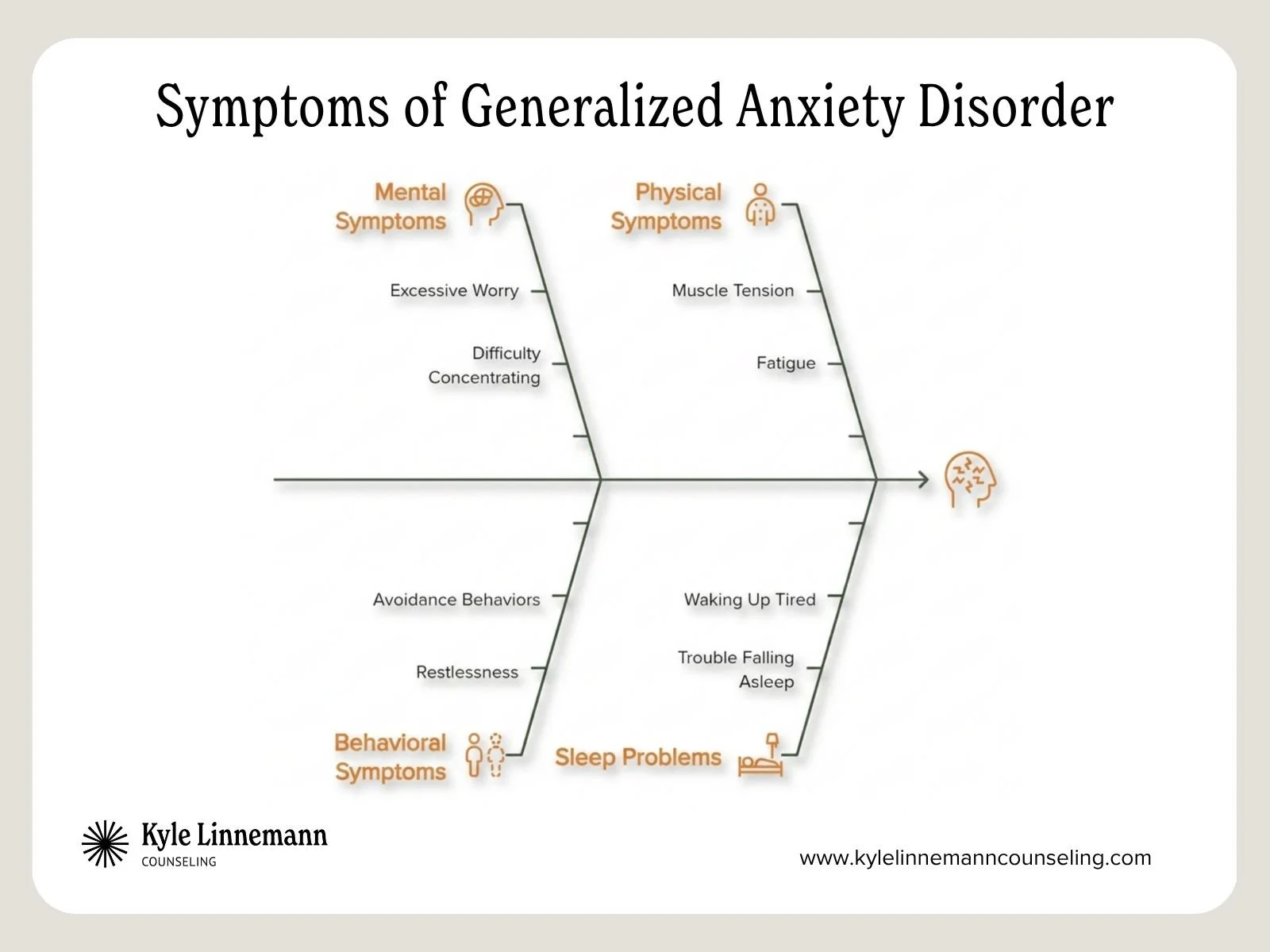
GAD vs. Normal Worry: What's the Difference?
This question comes up constantly. Everyone worries. So how do you know when anxiety has crossed into something that needs attention?
The difference isn't really about how much you worry. It's about how much it's getting in the way.
Duration and Frequency
To meet the criteria for a diagnosis of generalized anxiety disorder, worry and anxiety have to be present on more days than not for at least six months. That's a meaningful threshold. It's not situational stress, and it's not a bad week.
Control
People with GAD typically find it very difficult to control their worry even when they want to. They might recognize the anxiety is excessive but feel powerless to stop it. Normal worry tends to come and go; GAD worry feels more like a constant background hum that won't turn off.
Impact on Daily Life
The clearest signal that worry has become a mental health condition is when it starts affecting your ability to function. Relationships, work, sleep, decision-making, physical health. When anxiety is shaping those things consistently, that's when I'd want to talk to someone.
If you're reading this and thinking, "This is just how I am," I want to gently push back on that. Many people living with GAD have assumed for years that their anxiety level was just their personality. It doesn't have to stay that way.
What does it feel like to have GAD?
People with GAD often describe a constant background hum of dread or worry that doesn't fully go away. It can feel like waiting for something bad to happen, even when everything is technically fine. The worry moves between topics and tends to be hard to shut off.
Who Gets GAD and What Causes It?
GAD can affect anyone, but it's not random. There are patterns in who develops it and why.
Age of Onset
GAD can begin at any age. Some people report feeling anxious all their lives. Others develop it after a major stressor. Research from the University of Pennsylvania's Center for the Treatment and Study of Anxiety notes that while the median age of onset is around 30, the range is wide. The risk is highest between childhood and middle age.
Biological and Genetic Factors
There's a genetic component to GAD. If a parent or sibling has an anxiety disorder, you're more likely to develop one. The disorder probably involves how the brain's fear circuits communicate, specifically how the amygdala and prefrontal cortex manage the stress response.
That said, having a genetic predisposition doesn't mean GAD is inevitable. Environment, relationships, and life experiences all play a role in whether those tendencies develop into a full disorder.
Life Experiences and Stress
Stressful or traumatic life events can trigger GAD or make existing anxiety worse. A job loss, a health scare, a relationship ending, chronic illness, major life transitions. The stress may pass, but the anxiety pattern can persist long after it does.
When GAD Looks Like High Functioning
One pattern I see constantly that rarely gets discussed: GAD that hides behind success. The person checking every box at work, keeping up appearances, staying busy so they don't have to sit with the worry. From the outside, they look fine. On the inside, they're exhausted.
This is sometimes called high-functioning anxiety. It's not an official diagnosis, but it describes something very real. The anxiety doesn't stop you from performing. It drives you to perform. Preparation feels like control. Staying busy feels safer than slowing down. But the cost is enormous, and it usually shows up eventually as burnout, physical symptoms, or relationships quietly falling apart.
If this sounds familiar, you're not unusual. Many of the adults I work with have spent years functioning well on paper while quietly struggling. Recognizing that anxiety is the thing driving the performance, not just a side effect of a busy life, is often the first real shift.
This is one of the reasons I find ACT therapy (Acceptance and Commitment Therapy) especially useful for GAD. Rather than fighting anxious thoughts, it helps people change their relationship with them, which is a very different thing from just managing symptoms.

How Is GAD Diagnosed?
A formal GAD diagnosis comes from a mental health professional or healthcare provider using criteria from the Diagnostic and Statistical Manual of Mental Disorders (DSM-5).
The Diagnostic Criteria
To be diagnosed with GAD, the worry needs to be present on most days for at least six months, be difficult to control, and come with at least three of the following six symptoms:
Restlessness or feeling keyed up or on edge
Being easily fatigued
Difficulty concentrating or mind going blank
Irritability
Muscle tension
Sleep disturbance
The symptoms also need to cause significant distress or interfere with daily functioning, and they can't be better explained by a substance, medication, or another medical or mental health condition.
What a Healthcare Provider Will Ask
Your doctor or therapist will want to understand the full picture. Expect questions about how long the symptoms have been present, what kinds of things you worry about, and how anxiety is affecting your life at work, at home, and in relationships.
They'll also want to rule out medical conditions that can mimic anxiety, like thyroid issues or certain cardiovascular conditions. A physical exam and basic lab work are sometimes part of this process.
Why an Accurate Diagnosis Matters
GAD symptoms overlap with several other mental health disorders, including panic disorder, social anxiety disorder, and obsessive-compulsive disorder. Getting an accurate diagnosis means getting a treatment plan that's actually built around what you're experiencing, not a generic anxiety approach.
Can GAD go away without treatment?
For most people, GAD is a chronic condition that tends to persist without treatment. Symptoms may ease during lower-stress periods but typically return. With the right treatment, including therapy and sometimes medication, significant improvement is very realistic.
GAD Often Comes with Other Conditions
One thing that surprises many people is how rarely GAD shows up alone. Harvard Health notes that between 50% and 90% of people with GAD have at least one co-occurring condition, most commonly depression, panic disorder, or substance use issues.
GAD and Depression
The two conditions share overlapping symptoms and often show up together. Fatigue, sleep problems, difficulty concentrating, feeling disconnected. When someone has both, it's important to treat them as connected rather than addressing one and hoping the other resolves on its own.
GAD and Panic Disorder
GAD and panic disorder are different, though they can coexist. GAD involves chronic, persistent anxiety and worry; panic disorder involves intense, sudden episodes of fear.
GAD and Substance Use
Some people begin using alcohol or other substances to manage anxiety symptoms. It can feel helpful short-term. But alcohol and many substances disrupt the very brain chemistry that regulates anxiety, often making GAD worse over time. A substance use disorder alongside GAD complicates treatment, but it doesn't make recovery impossible. It just means both need to be part of the conversation.
Treatment for Generalized Anxiety Disorder
Here's the good news: GAD responds well to treatment. This is not a condition people have to white-knuckle their way through forever.
Psychotherapy
Psychotherapy is one of the most effective treatments for GAD, and it's where most of my work with clients begins. Two approaches have the strongest evidence base:
Cognitive Behavioral Therapy (CBT) helps people identify and shift the thought patterns that feed anxiety. It's structured, skills-based, and has decades of research supporting its effectiveness for treating GAD specifically.
Acceptance and Commitment Therapy (ACT) takes a different angle. Rather than challenging anxious thoughts directly, ACT helps you change your relationship with them. The goal isn't to eliminate anxiety, it's to stop letting anxiety run the show. I often integrate ACT into my work with clients because I find it especially powerful for people who've been "fighting" their anxiety for years without it getting better.
Both of these fall under the umbrella of cognitive behavioral therapy approaches, and both are recognized as effective treatment options by mental health professionals and researchers alike.
Medication
For many people, medication is a useful part of the treatment plan. SSRIs (selective serotonin reuptake inhibitors) like sertraline are typically the first antidepressant option, working by increasing available serotonin in the brain. SNRIs and buspirone are also commonly used. Benzodiazepines may help short-term but aren't recommended for long-term treatment of GAD.
Medication decisions always belong with a prescribing healthcare provider. For some people, combining therapy and medication can be especially helpful.
A Treatment Program Built Around You
The most effective treatment programs for GAD aren't one-size-fits-all. They're built around your specific symptoms, history, what's worked before, and what you actually want your life to look like. A good mental health professional will help you build that plan rather than hand you a generic one.
Lifestyle Changes That Support Anxiety Treatment
Therapy and medication do the heavy lifting, but lifestyle changes can make a meaningful difference, especially when you're in the middle of treatment.
Movement
Regular exercise is one of the most well-documented ways to reduce anxiety symptoms. It doesn't have to be intense. Even consistent walking helps regulate the stress hormones that keep the anxiety cycle running.
Sleep Hygiene
Poor sleep and anxiety feed each other in both directions. A consistent sleep schedule, limiting screens before bed, and keeping the bedroom associated with rest can all help interrupt that cycle.
Reducing Caffeine and Alcohol
Both caffeine and alcohol can worsen anxiety symptoms, caffeine by increasing physiological arousal, alcohol by disrupting sleep and neurochemistry. This doesn't mean you have to give them up entirely, but if your symptoms are severe, cutting back is worth trying.
Connection and Support
Anxiety tends to grow in isolation. Having people in your life who understand what you're going through, or are at least trying to, can buffer the intensity of it. If you're not sure how to let people in, my article on how to help someone with anxiety might be useful to share with someone close to you.
Ready to Stop Just Managing and Start Actually Feeling Better?
I know how exhausting it is to live with anxiety that won't turn off. The kind that follows you into sleep, into conversations, into moments that should feel good but don't quite. You've probably tried managing it on your own. And maybe it's helped, a little. But you're still here, still tired of it.
That's not a failure. That's just what anxiety does when it doesn't get real help.
At Kyle Linnemann Counseling, we work with anxiety from the inside out. My approach draws on evidence-based methods including ACT and CBT, and it's built around understanding what's actually driving your anxiety, not just teaching you how to cope with the surface of it. I serve individuals in Erlanger, KY, across Northern Kentucky, and throughout Greater Cincinnati, including online therapy for those who prefer it.
If you're experiencing symptoms of generalized anxiety disorder, or you've been carrying anxiety for a long time and you're ready to feel differently, I'd love to connect. Reach out to start the conversation.
You don't have to keep white-knuckling it. Real change is possible, and it often starts with one honest conversation.