What Is Disenfranchised Grief? Understanding Hidden Loss
Disenfranchised grief is grief that isn't publicly acknowledged, socially supported, or recognized as a "real" loss by the people around you. It happens when you lose something or someone meaningful, but the world around you doesn't respond with the sympathy you need. No cards arrive. No one brings food. People may even suggest you should be over it already. Yet the pain is just as real. If that sounds familiar, you are not alone, and your grief is valid.
In this article, we’ll explore:
What disenfranchised grief is—and how to recognize it
Common examples of unacknowledged losses
The impact of this kind of grief
How to find support and begin the healing process
If you’re feeling the ache of a significant loss that others haven’t recognized, please know: the grief you are feeling is real. And you deserve support through it.

What Is Disenfranchised Grief
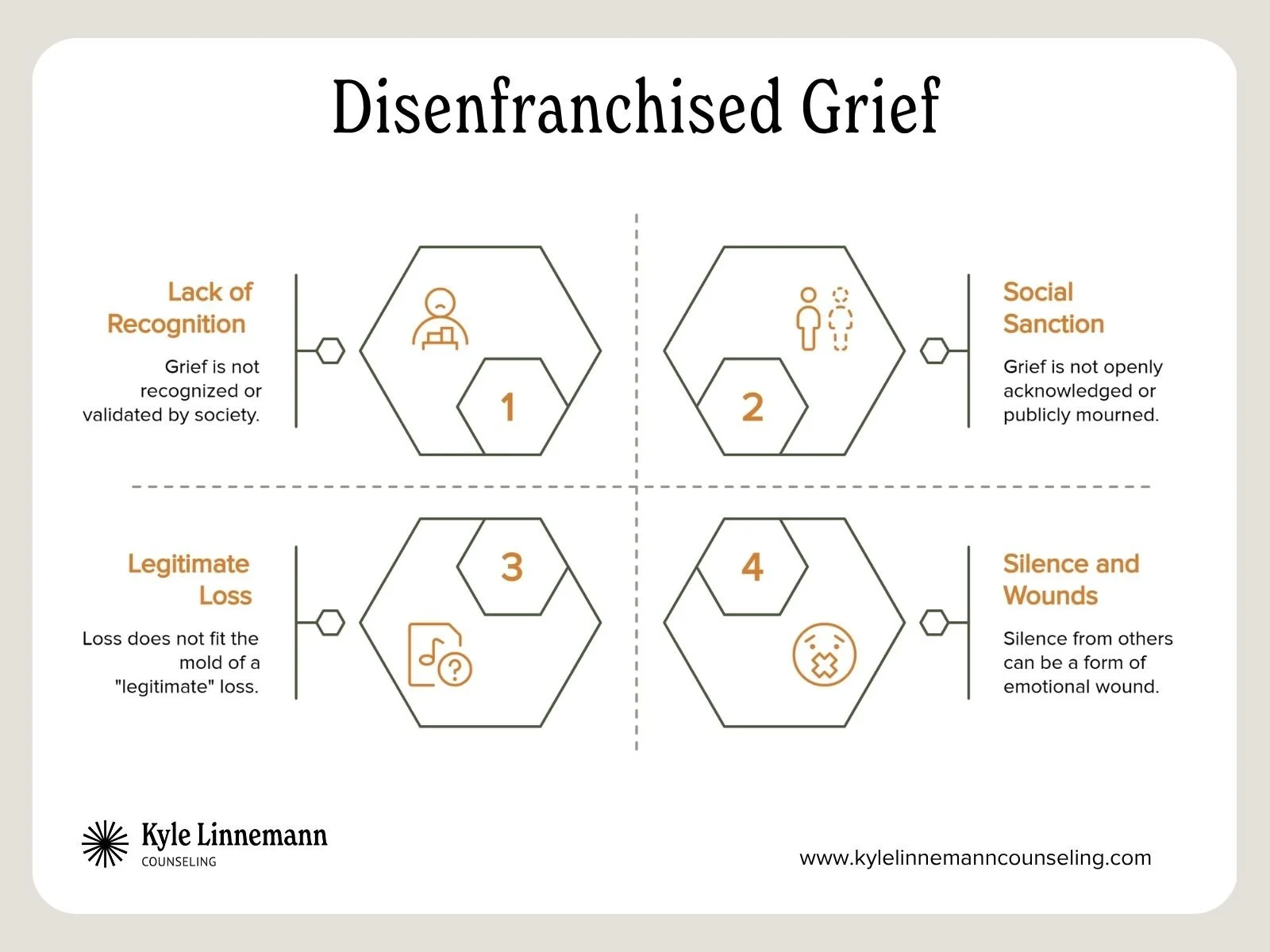
Disenfranchised grief means your grief isn’t recognized or validated by the people and society around you. The term was coined by grief researcher Dr. Kenneth Doka, who described it as grief that "cannot be openly acknowledged, socially sanctioned, or publicly mourned." In other words, your loss is real and painful, but others either don't see it that way or they don't give you space to grieve it.
The word "disenfranchise" means to deprive someone of a right. In this case, that right is the right to grieve openly. When a loss doesn't fit into the mold of what society considers a "legitimate" loss, people around you may not know how to respond, or may not respond at all. That silence can be its own kind of wound.
As a grief counselor, I see this often. A client loses a pregnancy early in the first trimester. Another ends a relationship that no one in their life knew about. Another cares for a patient who dies, then returns to work the next morning because there's no bereavement leave for that kind of loss. All of these people are grieving. All of their grief is real. And too often, all of them are told, directly or indirectly, that it shouldn't hurt this much.
Common Examples of Disenfranchised Grief
Disenfranchised grief can follow almost any type of loss. What makes it disenfranchised is not the loss itself, but how others respond to it. Here are some of the most common examples:
Loss of a Pet
Pet loss is one of the most frequently dismissed forms of grief. A dog or cat can be a daily companion for a decade or more, yet mourners often hear "it was just an animal" or feel pressure to move on quickly. The bond was real. The grief is real.
Pregnancy Loss and Infertility
Miscarriage, stillbirth, and failed fertility treatments can bring profound grief, but because the loss happened before others formed a bond with the child, it is often minimized. Many people grieve quietly and alone, without the support they need and deserve.
Loss Through Divorce or Breakup
Ending a long-term relationship, especially a marriage, is a significant loss. But because the person is still alive, and because others may have opinions about the relationship, the grief is rarely acknowledged the way it would be after a death.
Losing a Relationship That Was "Unofficial"
This includes losses like the death of a close friend, a work mentor, an ex-partner, or someone you cared for in a professional role. If the relationship wasn't socially recognized or labeled, the grief that follows may not be recognized either.
What are the most common disenfranchised grief examples?
The most common examples of disenfranchised grief include the loss of a pet, pregnancy loss or miscarriage, grief after a breakup or divorce, the death of a close friend or colleague, or losses related to stigmatized deaths (such as suicide or overdose).
Stigmatized Deaths
When someone dies by suicide, overdose, or in another way that carries social stigma, their loved ones may grieve in isolation, unsure of how to talk about the loss or how others will respond. The grief becomes layered with shame, even though no shame is warranted.
Job Loss, Health Loss, and Life Transitions
Grief isn't limited to death. The loss of a career, a health diagnosis that changes your abilities, a miscarriage of a long-held dream, these are real losses that deserve space. Disenfranchised grief can follow any significant change that takes something meaningful away from you.
Loss of a Loved One to Dementia
When someone you love is still physically present but no longer recognizes you, it is a profound form of ongoing loss. This kind of grief, sometimes called ambiguous loss, is rarely acknowledged by others because there has been no death. But the person you knew is gone in many ways that matter deeply.

Why Some Grief Goes Unacknowledged
Disenfranchised grief happens because society has unspoken rules about whose grief "counts." These rules are shaped by cultural norms, family traditions, and a general discomfort with death and strong emotions. When a loss doesn't fit the expected script—a spouse dies, a parent passes, a child is lost—people don't know how to respond. So they don't.
It is rarely malicious. Most people who fail to acknowledge disenfranchised grief are not trying to be cruel. They may simply not know what to say, or they may not realize how much the loss meant to you. But the effect on the grieving person is the same: a message, however unintended, that their pain is not valid.
There are three main reasons a loss becomes disenfranchised:
The relationship is not recognized. If others didn't know about or approve of your relationship with the person you lost, they may not see your grief as warranted.
The loss is not recognized. Some losses—a pet, a miscarriage, a job—aren't treated as serious losses by society at large, even when they are life-altering for the person experiencing them.
The griever's right to grieve is not recognized. Sometimes people feel that you shouldn't grieve a particular loss based on your role or your history with the person. A healthcare worker who loses a patient, or someone grieving an abusive ex, may be told their feelings don't make sense.
How is disenfranchised grief different from prolonged grief?
Disenfranchised grief refers to the nature of the loss—specifically, that it isn't recognized or validated by others. Prolonged grief refers to a person's response to a loss, where symptoms are prolonged and severe enough to significantly disrupt daily functioning.

How Disenfranchised Grief Affects You
Disenfranchised grief doesn't just hurt in the moment; it can make the entire grieving process harder and longer. When your grief isn't supported, healing becomes more difficult.
Research published in Frontiers in Psychology found that disenfranchised grief is associated with a higher risk of prolonged grief disorder, depression, and post-traumatic stress symptoms. Without the social rituals and community support that typically accompany a recognized loss, grief can go underground, only to resurface later in unexpected ways.
Common disenfranchised grief symptoms:
Intense isolation and loneliness
Shame or feeling like something is "wrong" with you for still grieving
Guilt about whether you have the "right" to feel sad
Difficulty asking for help or support
Withdrawal from relationships
Anxiety or depression that lingers well past the loss
What makes disenfranchised grief especially painful is that it adds an extra layer on top of the grief itself. You're not just grieving your loss—you're also grieving the support you never received, and struggling with the message that your pain doesn't matter. That is an enormous weight to carry alone.

Disenfranchised Grief vs. Other Types of Grief
It helps to understand how disenfranchised grief differs from other grief experiences you may have heard of.
| Type of Grief | What Defines It | Key Challenge |
|---|---|---|
| Normal (Uncomplicated) Grief | A natural response to a recognized loss, such as the death of a close family member or loved one. | Moving through sadness and adjusting over time, often with support from others. |
| Prolonged Grief | Grief that stays intense, lasts a long time, and makes it hard to function after the loss. | Symptoms do not ease as expected and may require professional support. |
| Anticipatory Grief | Grief that begins before an expected loss, such as after a terminal illness diagnosis. | Coping with the pain of a loss that has not happened yet, often without much acknowledgment from others. |
| Disenfranchised Grief | Grief connected to a loss that is not openly recognized, validated, or supported by others. | Mourning in isolation and feeling like there is no real permission to grieve. |
It is also worth noting that any type of grief can become prolonged over time, especially disenfranchised grief, which is more likely to go unaddressed.
How to Cope With Disenfranchised Grief
Healing from disenfranchised grief starts with one truth: you do not need anyone else's permission to grieve. Your loss was real. Your pain is valid. Here are some gentle steps that can help.
Name and Validate Your Own Grief
The most powerful first step is simply acknowledging your grief to yourself. You are not overreacting. You are not weak. You are grieving a real loss.Research consistently shows that naming and validating your emotions, even internally, reduces emotional distress. You can start right here, right now.
Create Your Own Ritual
Traditional grief rituals—funerals, memorials, condolence cards—signal to the world that a loss matters. When those rituals don't exist, you can create your own. Write a letter. Plant something. Light a candle. Mark the anniversary privately. Rituals don't need to be public to be meaningful. They just need to be yours.
Find People Who Will Bear Witness
You deserve to be heard. Whether that's one trusted friend, an online grief community, or a therapist, find at least one person who will listen without judgment and without rushing you. You don't need to explain or justify why your grief is real. It simply is.
Release the Need for Outside Validation
One of the most painful parts of disenfranchised grief is waiting for others to acknowledge your loss. If that acknowledgment never comes, the grief can get stuck. Healing often involves releasing the need for that external validation, not because your loss doesn't deserve it, but because your healing shouldn't depend on it.
Don't Grieve Alone If You Don't Have To
Isolation is one of the biggest risks with disenfranchised grief. Reaching out—to a therapist, a support group, or anyone who truly listens—can make a profound difference. You are not a burden. The weight you're carrying is real, and sharing it helps.
Can you heal from disenfranchised grief without therapy?
Some people do find healing through personal rituals, supportive relationships, and self-compassion practices. However, disenfranchised grief is especially prone to going unprocessed because of the isolation and shame it carries. Therapy provides a safe space to name and validate the loss, address any shame or guilt, and develop healthy coping strategies.
When to Seek Disenfranchised Grief Therapy
Therapy is not only for people who are falling apart. It's for anyone carrying something too heavy to carry alone. Grief therapy, especially for disenfranchised grief, gives you a dedicated space to be heard, to name what you've lost, and to process it without judgment.
Consider reaching out for professional support if:
You feel like you can't talk to anyone about your loss
Grief is affecting your sleep, appetite, or ability to work
Months have passed, and the intensity of your grief hasn't eased
You feel shame, guilt, or confusion about why you're still hurting
You are struggling with depression, anxiety, or intrusive thoughts
I specialize in grief counseling for all types of loss, including the losses the world doesn't always see. As a grief therapist with 13 years of experience, I provide evidence-based, compassionate care that helps you process what you've been through and find a path forward.
You don't have to justify your grief to receive support. Reach out to schedule a session.